Step 5 of 5 in the shadow AI governance guide. How security and GRC leaders turn AI controls into evidence a board can read and an auditor can test.
The short answer: To make AI governance defensible, map your controls to the frameworks, standards, and laws that apply to you, collect evidence as the work happens instead of at audit time, separate the controls automation can support from the ones people must attest to, and report a small set of trend-based numbers to the board. Do this because governance you cannot evidence is a position, not a program.
Why governance without evidence does not hold
Your board is asking whether the organization is safe with AI. Your auditors are asking you to show it. A policy document answers neither question. Evidence does: a record that a control existed, who owned it, and that it operated during the period.
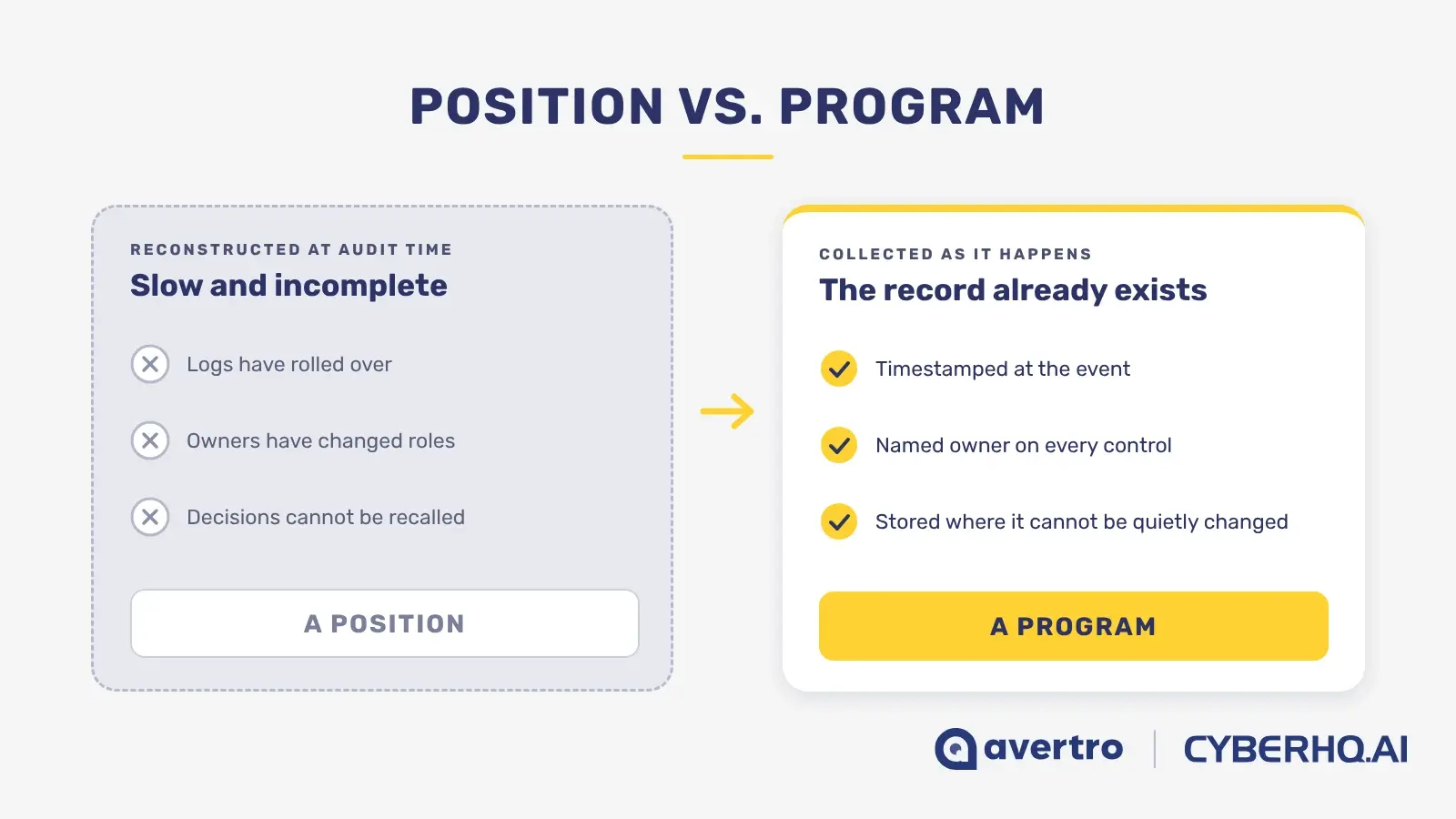
Reconstructing that evidence at audit time is slow and incomplete. Logs have rolled over, owners have changed roles, and the people who made decisions cannot recall why. Governance built on evidence collected as the work happens survives that scrutiny, because the record already exists.
The pressure is rising. The EU AI Act is binding law with risk-based obligations, and customers increasingly ask for proof of AI controls in security reviews. Each of them expects something different, which is why the first step is knowing which frameworks, standards, and laws apply to you.
How to make AI governance defensible in five steps
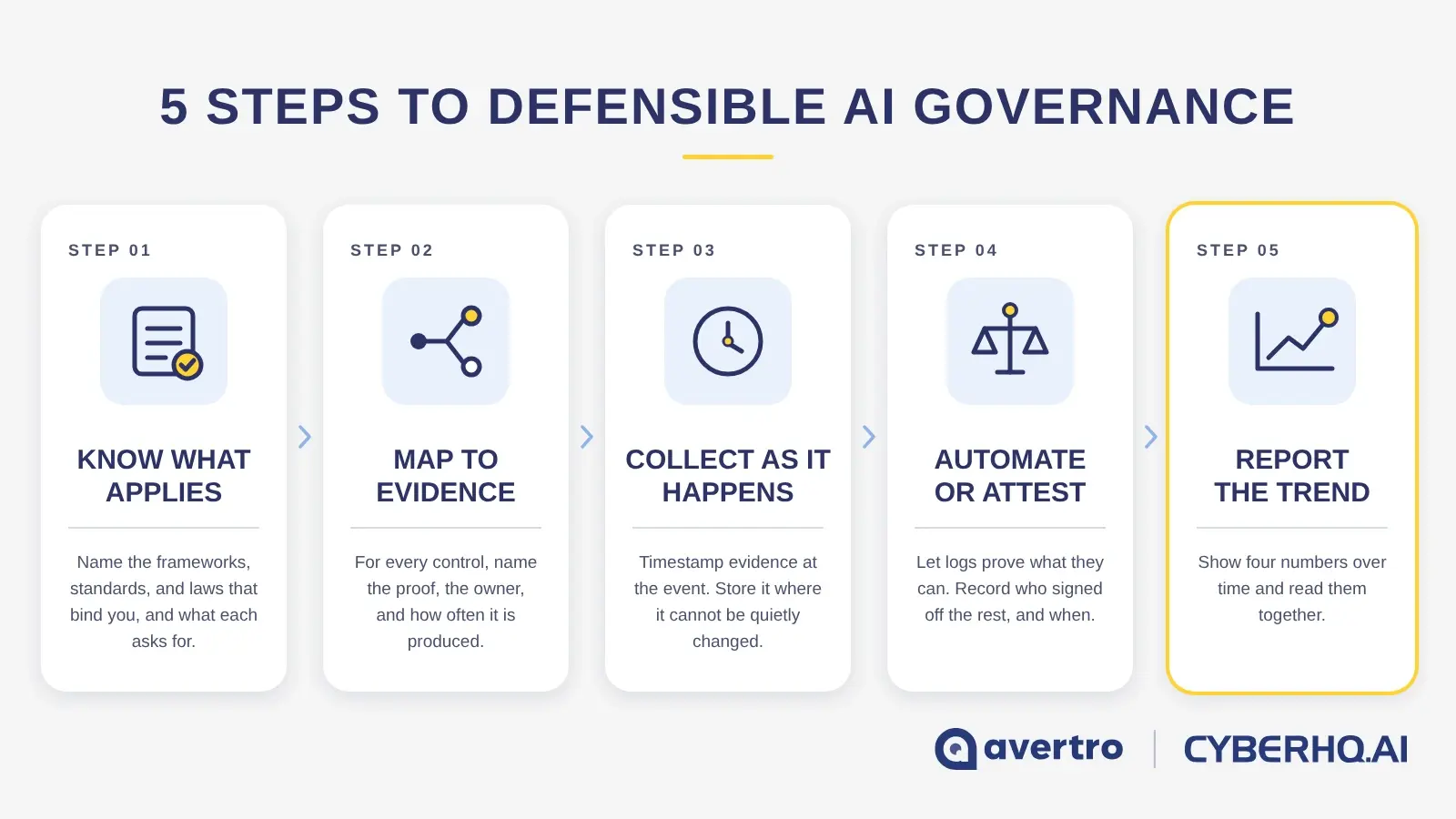
1. Know which frameworks, standards, and laws apply
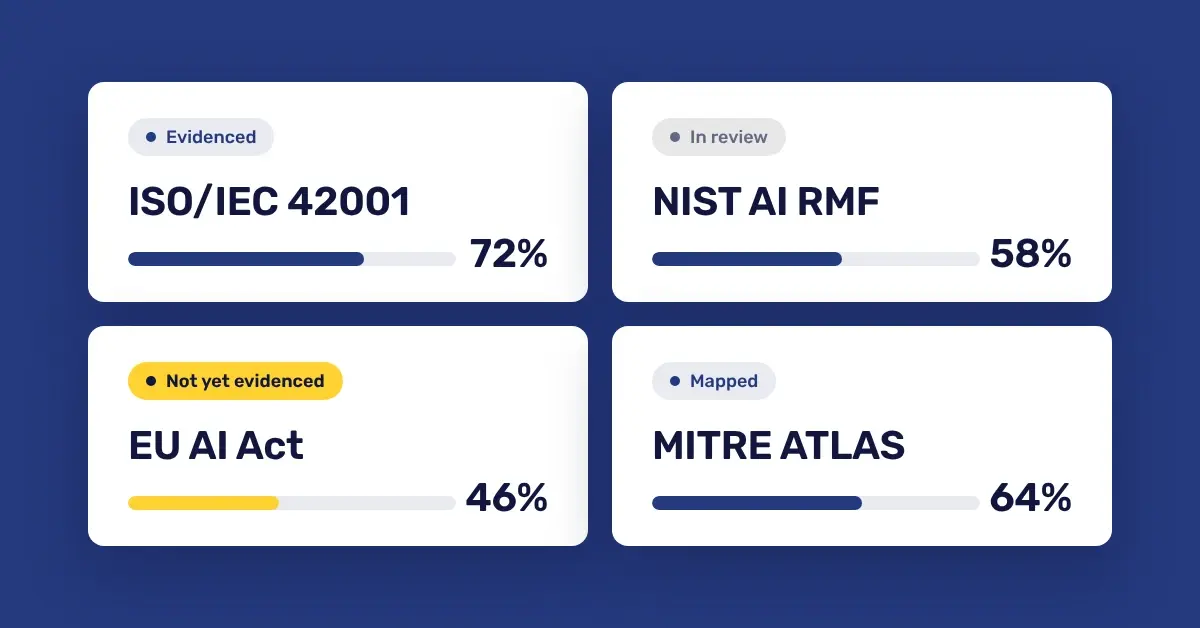
Four references come up most often. They are different kinds of thing, and each asks for different evidence:
-
ISO/IEC 42001: a certifiable standard. An accredited body can audit you against it and issue a certificate.
-
NIST AI Risk Management Framework (AI RMF): a voluntary framework organized around Govern, Map, Measure, and Manage. You align to it, and no one certifies you against it.
-
EU AI Act (Regulation (EU) 2024/1689): binding law, so it sets legal obligations rather than best practice. Its risk-based requirements apply to providers, deployers, importers, and distributors of AI systems, including non-EU organizations whose systems or outputs are used in the EU. Obligations phase in through 2028.
-
MITRE ATLAS: a threat knowledge base that catalogs adversarial techniques against AI systems. You map attacks to it. You do not attest to it.
2. Map each control to evidence you can produce
For every control, name the evidence that proves it, the owner, and how often it is produced. A platform catalog record proves discovery. A log of data loss prevention (DLP) findings proves monitoring. A quarterly license review proves usage governance. If you cannot name the evidence, you do not yet have a control. You have an intention.
3. Collect evidence as it happens
Evidence is strongest when it is timestamped at the moment of the event and stored where it cannot be quietly changed. Build collection into the normal operation of each control. Anything that depends on someone remembering to export a screenshot before the audit will be missing when you need it.
4. Separate what automation can carry from what people must attest
Some controls cannot be proven by a log: approving a policy, accepting a risk, training staff, reviewing a vendor. Continuous evidence supports those attestations and makes them cheaper. It does not replace them. Record who attested, when, and on what basis, and be honest in front of an auditor about which controls are automated and which are human.
5. Report a small set of trend numbers
Boards read trends faster than inventories. Pick a handful of numbers, show them over time, and read them together. If approved-tool usage rises while findings fall and coverage holds, governance is working. If usage and findings both fall, you may have blocked the work. If findings fall because coverage fell, you have lost visibility.
What good looks like: every claim to the board or an auditor traces to evidence collected during the period, not reconstructed at audit time.
How to measure AI governance
Report four numbers to your CISO and board:
-
Evidence coverage: the share of mapped controls with evidence collected in the current period.
-
Attestation currency: the share of human-attested controls signed off on schedule.
-
Open signals with no owner: the share of open findings and alerts with no named owner.
-
Posture trend: one posture score, shown as a trend, not as a single reading.
Rising evidence coverage and attestation currency, with a steady or improving posture trend, means the program can withstand an audit. A strong posture score with weak evidence coverage means you have good controls you cannot prove.
Continue the guide
Defensible AI governance is Step 5 of 5. Previous: Step 4, data loss prevention for AI tools. Read the full guide again from the start, How to Govern Shadow AI Without Blocking Innovation.
How CyberHQ.ai fits
CyberHQ.ai gives business leaders the evidence to govern AI without blocking it: which tools people use, who or what is using them, and what data is moving. It does not replace your existing security stack. It sits alongside cloud access security broker (CASB), DLP, and security information and event management (SIEM) tools and makes sense of them by adding the AI-specific context they were not built to deliver.
-
See: every AI tool in use, and whether each session is a person or an agent.
-
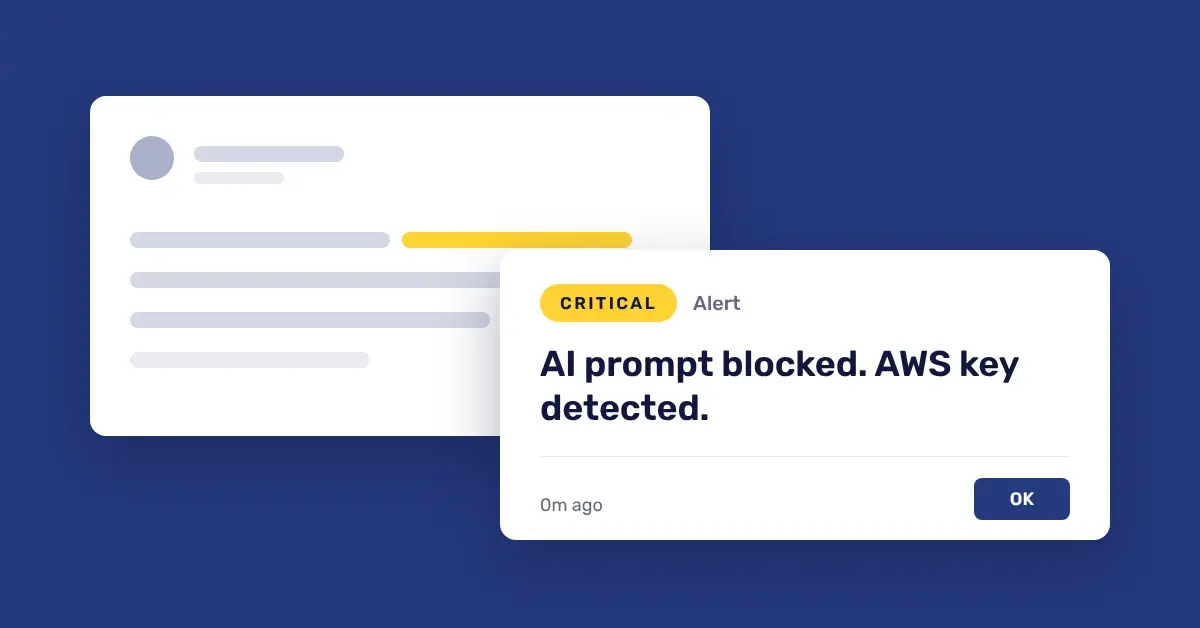
Act: sensitive data caught in prompts and pastes, with responses you set by severity, from monitor-only to block.
-
Prove: an AI Security Score and framework evidence your board and auditors can test, including ISO/IEC 42001, NIST AI RMF, EU AI Act, and MITRE ATLAS.
It deploys in under 30 minutes with no proxy or SSL inspection, and meaningful DLP findings typically appear within 24 to 48 hours. See plans and capabilities.
Trial CyberHQ.ai against your own AI footprint and see which AI tools your people are using, whether each session is a person or an agent, which licenses sit idle, and what sensitive data is moving. Start your free 30-day CyberHQ.ai trial, no credit card required.