Step 4 of 5 in the shadow AI governance guide. How to stop sensitive data entering AI tools in stages, so the business keeps its productivity and the program keeps its support.
The short answer: To protect sensitive data in AI tools without halting work, stage your enforcement. Monitor what is actually sent, tune the rules with the people who own the data, coach at the point of risk, soft-block repeat and high-severity behavior, and hard-block only critical findings and genuinely unapproved destinations. Pair every block with an approved alternative. Do this because a hard block on day one pushes people to personal devices and accounts.
Why a day-one block backfires
A hard block feels like the safe choice. In practice it moves the risk. People who need AI to do their jobs switch to a personal laptop or a personal account, and you lose the visibility you had. The first executive complaint about a blocked tool can then end the program.
Data loss prevention (DLP) built for files, email, and endpoints also struggles with AI traffic. Prompts are conversational and unstructured. Sensitive data arrives as pasted fragments, such as a few rows of customer records, a stack trace with credentials in it, or a contract clause. Rules written for attachments and file transfers miss these, or flag so many harmless prompts that the business stops trusting them.
The fix is not a stricter rule. It is a staged one, where each stage earns the trust that the next stage needs.
How to run DLP for AI tools in five steps
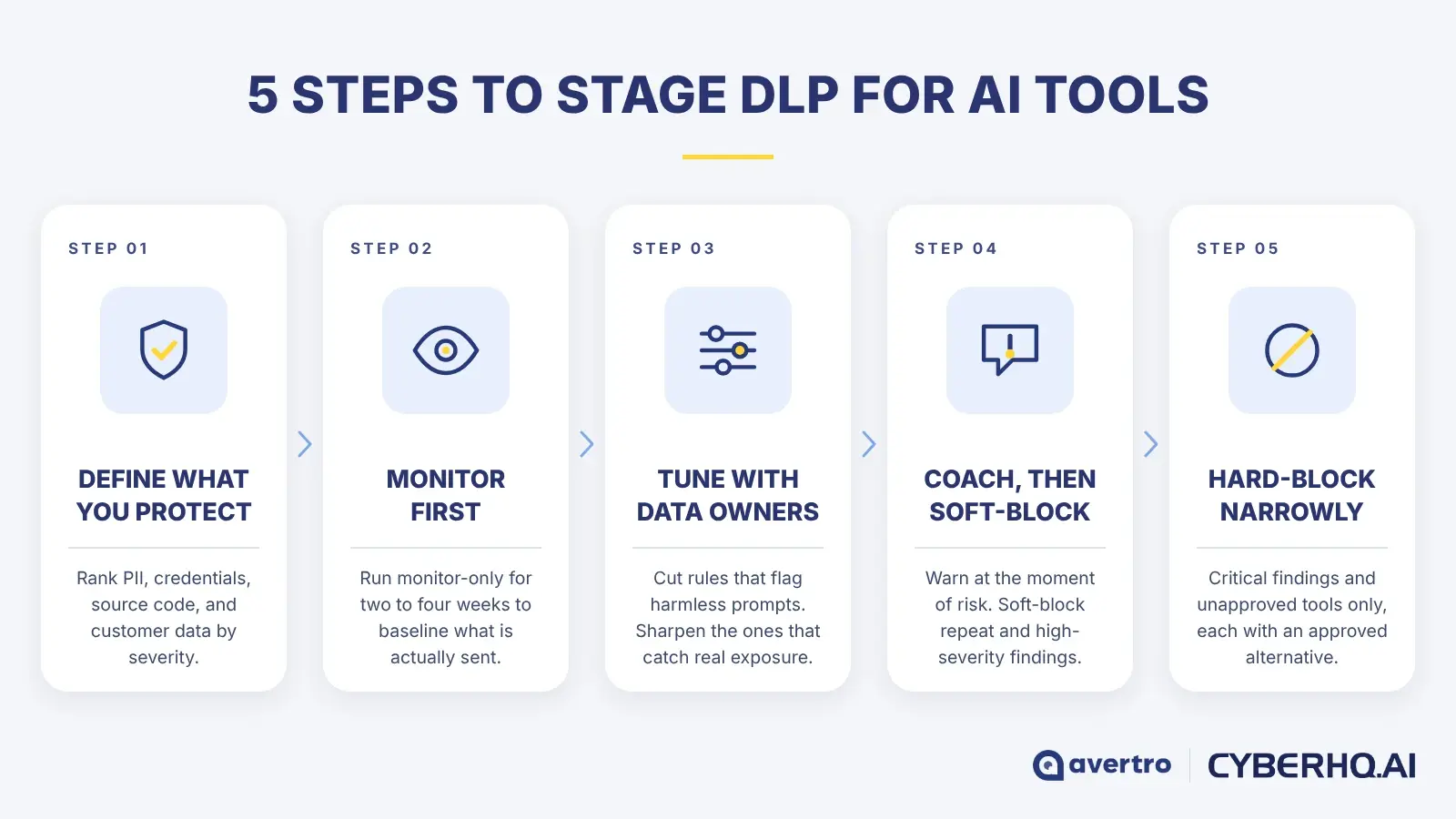
1. Decide what you are protecting
List the data types that matter and rank them by severity: personally identifiable information (PII), credentials and secrets, source code, customer data, regulated data, and custom patterns such as project code names. Severity decides how hard you enforce later, so agree on it with Legal and the data owners now.
2. Monitor first
Run in monitor-only mode long enough to see a normal work cycle, such as two to four weeks. Measure what is actually sent, to which platforms, by which groups. You are looking for real behavior, not a guess at it, and the baseline you build here is how you will prove later that enforcement worked.
3. Tune with the people who own the data
Review findings with the owners of the data, not only the security team. Remove rules that flag harmless prompts and sharpen the ones that catch real exposure. Rules the business trusts get enforced. Rules it does not trust get worked around.
4. Coach at the point of risk, then soft-block
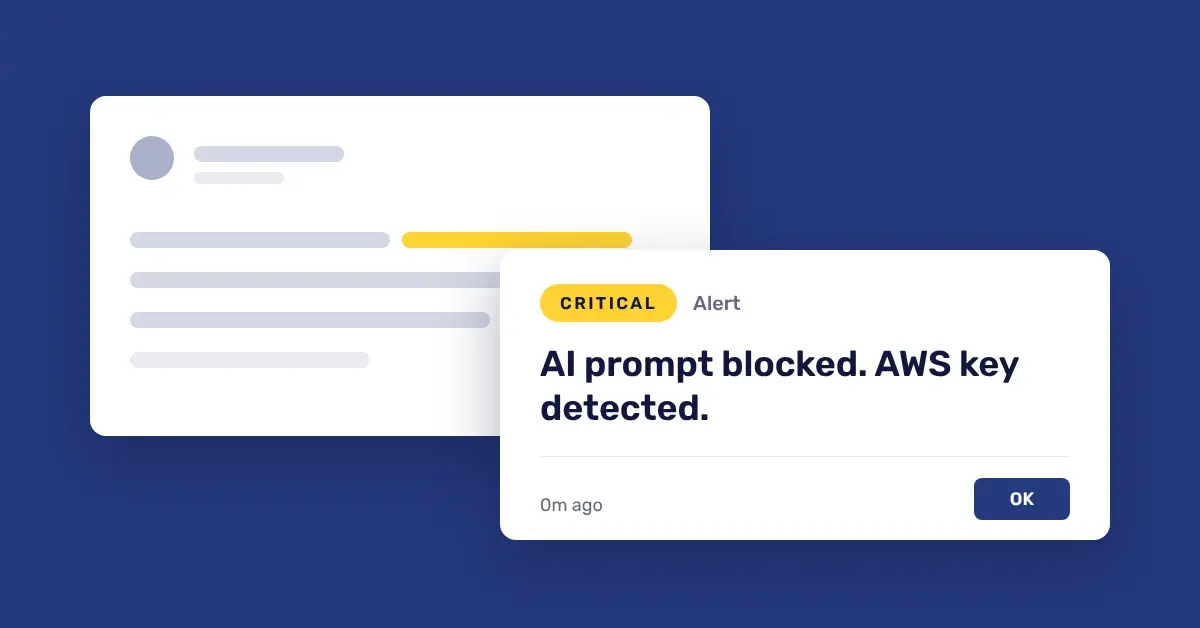
Show a short message at the moment someone is about to send sensitive data: what was detected, why it matters, and what to do instead. Most people correct course. Then soft-block repeat behavior and high-severity findings, with a way to continue that records a reason.
5. Hard-block narrowly, and always offer an alternative
Reserve hard blocks for critical findings, such as credentials and regulated data, and for genuinely unapproved destinations. Pair every block with an approved alternative, because the fastest way to reduce shadow AI is to approve a good tool. Also check each provider's data practices, including whether it trains on inputs, retains prompts, or stores data outside your jurisdiction.
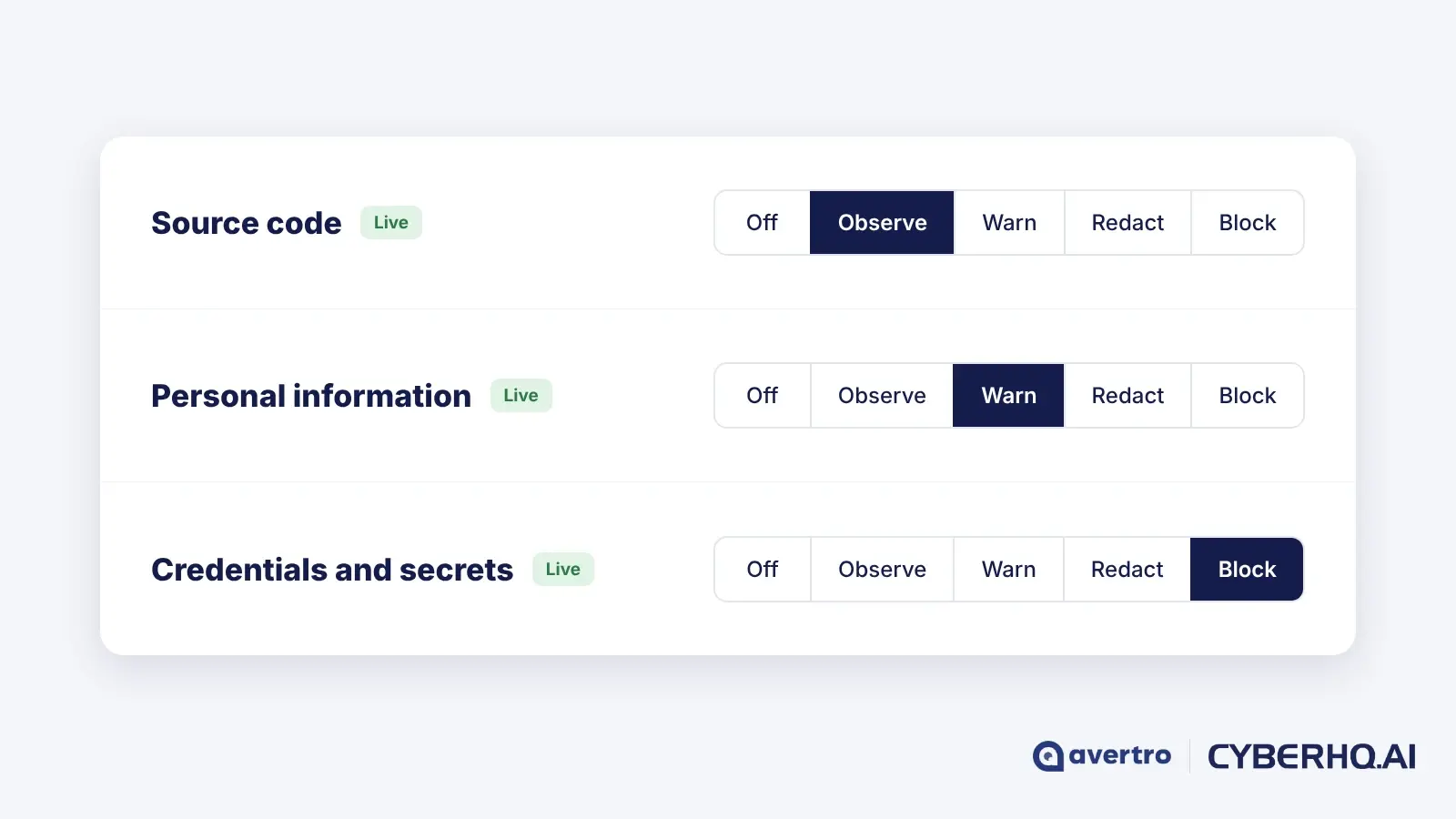
Image: Stylized UI of CyberHQ.ai options for DLP prevention on AI tools
What good looks like: weekly findings fall because behavior changed, not because the rules were loosened.
How to measure DLP for AI tools
Report four numbers to your CISO and board:
-
Findings per X active users: sensitive-data events each week for every X active AI users, where you set X to fit your size, so the number stays comparable as headcount changes.
-
Repeat rate: the share of findings from people who have been coached before.
-
Coaching acceptance: the share of coached events where the person removed or changed the data.
-
Block-to-alternative rate: the share of blocks that end with the person using an approved tool.
Falling findings with a high coaching acceptance rate means behavior is changing. Falling findings with falling AI activity means you may have blocked the work, not protected the data.
Continue the guide
Data loss prevention for AI tools is Step 4 of 5. Previous: Step 3, dormant AI license management. Next: Step 5, making AI governance defensible to your board and auditors. Or read the full guide, How to Govern Shadow AI Without Blocking Innovation.
How CyberHQ.ai fits
CyberHQ.ai gives business leaders the evidence to govern AI without blocking it: which tools people use, who or what is using them, and what data is moving. It does not replace your existing security stack. It sits alongside cloud access security broker (CASB), DLP, and security information and event management (SIEM) tools and makes sense of them by adding the AI-specific context they were not built to deliver.
-
See: every AI tool in use, and whether each session is a person or an agent.
-
Act: sensitive data caught in prompts and pastes, with responses you set by severity, from monitor-only to block.
-
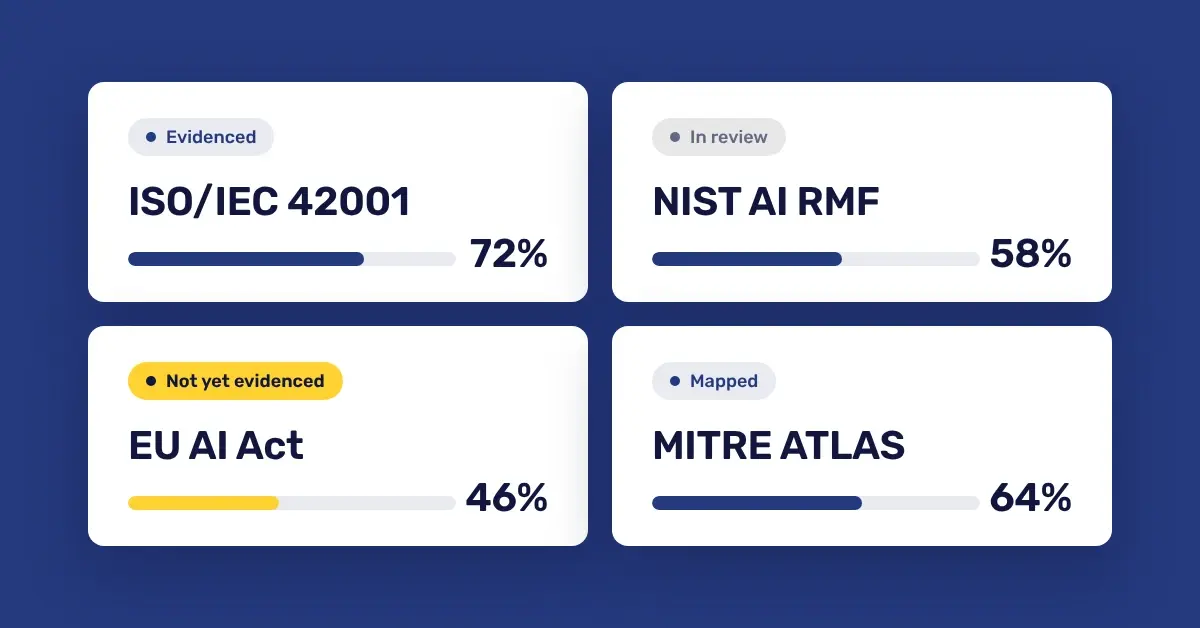
Prove: an AI Security Score and framework evidence your board and auditors can test, including ISO/IEC 42001, NIST AI RMF, EU AI Act, and MITRE ATLAS.
It deploys in under 30 minutes with no proxy or SSL inspection, and meaningful DLP findings typically appear within 24 to 48 hours. See plans and capabilities.
Trial CyberHQ.ai against your own AI footprint and see which AI tools your people are using, whether each session is a person or an agent, which licenses sit idle, and what sensitive data is moving. Start your free 30-day CyberHQ.ai trial, no credit card required.